
Ratty McRatface
The political reason of imbecilic twee

After this climax, the four animals continued to lead their lives…in great joy and contentment, undisturbed by further risings or invasions.
-Kenneth Grahame, The Wind in the Willows
Some years ago, as you may recall, the UK National Environmental Research Council were given funding by the government to have constructed a new research vessel. In what could in retrospect be understood to have been a rather naive move, they put out the task of the naming of the ship to public vote. Somebody - I believe it was a radio DJ at a small radio station somewhere - suggested ‘Boaty McBoatface’, and the idea caught on. Boaty McBoatface was the runaway winner of the public vote, although in the end the NERC went, boringly, with RRS Sir David Attenborough instead.
The Bank of England have clearly learned from this episode. Last year, they put out a Consultation Paper titled ‘What theme would you like to see on our next series of banknotes?’, in which they solicited views from the public on what ‘theme’ would be most appropriate for a forthcoming redesign of the £5, £10, £20 and £50 notes. But they couched the consultation in a caveat:
We may not select the theme that receives the most votes because we will also assess how each theme meets our criteria, the range of images available to the Bank to depict that theme and feedback from focus groups and other stakeholders. We may for example decide to use a combination of the above themes or others put forward by the public.
In other words, they already had a theme in mind and, in true managerial style, only put the matter out to consultation after the decision had already been made. It turns out that the theme will be wildlife. Whereas it has always previously been important historical figures - Winston Churchill, JMW Turner, George Stephenson, Charles Darwin, etc. - it will now be bucolic pictures of the usual suspects: most likely hedgehogs, badgers, robins, water voles, barn owls, and their ilk.
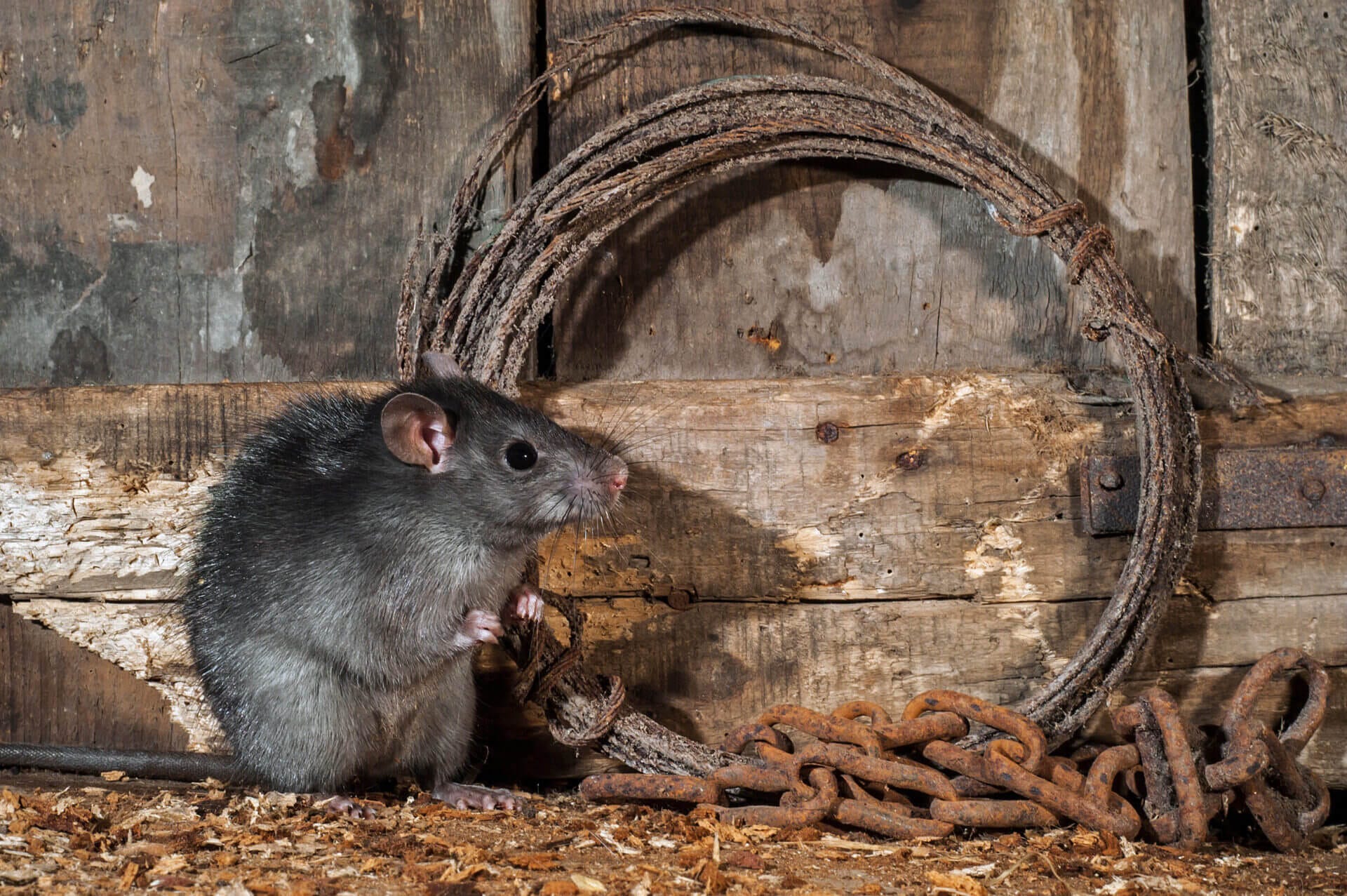
There was a predictable kerfuffle in opposition to this, led by, of all people, our old friend Ed Davey, who complained about the disappearance of the ‘Great Britons’ currently decorating our money. Less predictable was the RSPCA’s suggestion that the new banknotes depict ‘undervalued’ animals such as seagulls and, er, rats. Having had to dispose of the rancid corpse of a large brown rat that had somehow wedged itself under the floorboards in my kitchen last summer, together with the eye-wateringly foul stench it left behind, I am not sure what it is that is so valuable about rats that we are currently overlooking, nor whether we want plague-bearing vermin to be one of the symbols of modern Britain. Although I suppose that might be oddly fitting given the state of the country nowadays - politically, culturally, socially, and above all economically.
What has perhaps been overlooked in all of this, however, is what it says about what I will call the political reason of a state like the Yookay in 2026. Political reason, to recap, is the means by which a regime justifies its existence. It is that form of reason which explains why the regime should have authority in the first place, and why it should continue to do so. All regimes must have such justifications, because none - even North Korea - can govern by sheer force alone. People must, implicitly, agree that the regime should have authority over them. And there must therefore be a basis for its authority.
The British regime has various, to a certain extent overlapping, such bases for the authority it possesses. But the main one, and one which is emphasised much more strongly than elsewhere even in the Anglosphere, is that it manages diversity in the optimal way. The Yookay, our regime tells us, is and always has been a diverse, multicultural and multi-faith society. And the regime reconciles the conflicting interests of all of the different interest groups that come together under its diverse umbrella in the best possible way. Hence, as the Prime Minister, Sir Keir Starmer, himself puts it in the foreword to a recent policy paper put out by the Ministry of Housing, Communities and Local Government:
By any fair standard, Britain can be proud about of its approach to social cohesion. Simple things we take for granted – like inter-faith marriages, or religious freedom – are in fact a departure from the historical or international norm. Indeed, the ease with which people of different cultures and races live side-by-side in our diverse democracy is both envied and feared around the globe. Feared, because it provides a banal yet profound challenge to the increasingly noisy politics that says it simply cannot be done; people who are different cannot come together united under one flag. In our communities we show, daily, that it can.
The authority of the regime, in other words (insofar as it possesses any), rests on a claim to be able to pull together all of the diversity that is naturally and ineluctably present in the country, and bind it together as one integrated and successful whole. That is the stall that the regime sets out: keep us in charge, so that we can manage your diversity. All is for the best, in this, the best of all possible modern, multi-ethnic, multi-faith worlds democracies.
Steve Reed MP, the Secretary of State for Housing, Communities and Local Government, makes it even more explicit than the Prime Minister later in the same document:
People from different backgrounds getting on together isn’t a nice to have [sic], it is a fundamental pre-condition to [sic] the Britain we have come to expect and that is needed for Britain to thrive in the 21st Century. Without our multi-ethnic democracy there is no NHS, without cohesion there is no stability to plan ahead or weather attacks, without pride in Britain, there is no better future for our children.
Let’s leave to one side the fact that this reads as though it was written by a, not particularly bright, 13-year-old. (‘People from different backgrounds getting on together isn’t a nice to have, it is a fundamental pre-condition to the Britain we have come to expect and that is needed for Britain to thrive in the 21st Century’, indeed. This man studied English at university.) The claim that is being made, at least, is as clear as day: people from different backgrounds getting on together is a fundamental pre-condition ‘to’ the Britain ‘we have come expect’. That is what the state is for; that is why we need it. It makes possible the fundamental pre-condition of the nation itself, by managing diversity in the optimal way.
Keep reading with a 7-day free trial
Subscribe to News from Uncibal to keep reading this post and get 7 days of free access to the full post archives.